
Corporate Software Inspector: The Complete Guide to Software Compliance, Security, and Digital Governance
Modern businesses rely on software for almost every operation. From accounting and customer relationship management to cloud computing and cybersecurity, software has become the foundation of today’s digital workplace. However, managing hundreds or even thousands of software applications across an organization brings significant responsibilities. Companies must ensure every application is legally licensed, secure, properly maintained, and aligned with business policies.
This is where a corporate software inspector plays a critical role.
A corporate software inspector helps organizations maintain a healthy software environment by inspecting software assets, verifying license compliance, identifying security risks, and ensuring that all software follows legal and ethical standards. Rather than simply checking whether software is installed correctly, these professionals evaluate the entire software ecosystem to protect businesses from financial penalties, cybersecurity threats, operational disruptions, and compliance violations.
As organizations continue adopting cloud platforms, remote work, artificial intelligence, and digital transformation strategies, the importance of software governance has grown significantly. Businesses need professionals who can monitor software usage, reduce unnecessary costs, improve security, and ensure regulatory compliance.
This comprehensive guide explains everything you need to know about the corporate software inspector role, including responsibilities, skills, compliance requirements, inspection processes, career opportunities, tools, challenges, and future trends.
What Is a Corporate Software Inspector?
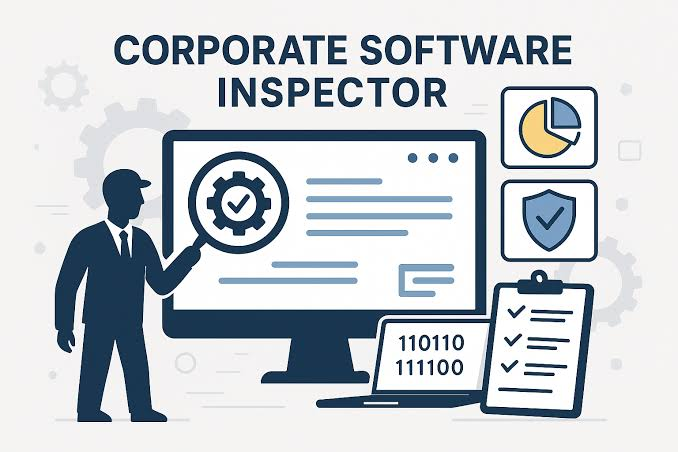
A corporate software inspector is an IT and compliance professional responsible for reviewing, monitoring, and evaluating an organization’s software environment. Their objective is to ensure that software is legally licensed, securely managed, properly maintained, and compliant with internal policies and external regulations.
A corporate software inspector works closely with:
- IT departments
- Cybersecurity teams
- Procurement departments
- Software vendors
- Legal teams
- Compliance officers
- Executive leadership
Together, these teams ensure software supports business operations without creating unnecessary legal, financial, or security risks.
Why Corporate Software Inspection Is More Important Than Ever
Businesses today use more software than ever before.
A single company may operate:
- Cloud platforms
- Desktop applications
- Mobile apps
- Enterprise software
- Collaboration tools
- Security solutions
- Customer management systems
- Financial software
- Productivity suites
- Industry-specific applications
Without proper oversight, organizations may face:
- License violations
- Software piracy
- Cybersecurity vulnerabilities
- Compliance failures
- Unnecessary software expenses
- Operational inefficiencies
A corporate software inspector helps reduce these risks through continuous monitoring and regular inspections.
The Main Purpose of a Corporate Software Inspector
The primary goal is to ensure that every software product used within an organization supports business objectives while remaining secure, legal, and cost-effective.
Their work focuses on:
- Compliance
- Risk reduction
- Security
- Cost optimization
- Governance
- Operational efficiency
- Digital accountability
Rather than reacting to problems, corporate software inspectors help prevent them before they occur.
Core Responsibilities of a Corporate Software Inspector
Although responsibilities vary between organizations, several duties remain consistent across industries.
Software Inventory Management
The first responsibility is identifying every software application installed throughout the organization.
This includes:
- Desktop software
- Cloud applications
- Mobile apps
- Virtual machines
- Servers
- Remote devices
Maintaining an accurate inventory creates the foundation for effective software governance.
License Compliance
Software licenses define how applications may legally be used.
Corporate software inspectors verify that organizations:
- Own valid licenses
- Use software within licensing limits
- Renew subscriptions appropriately
- Remove unauthorized software
- Maintain accurate documentation
License compliance helps avoid costly legal disputes and financial penalties.
Software Asset Management
Software represents a valuable business asset.
Inspectors monitor:
- Software purchases
- Usage levels
- License renewals
- Upgrade schedules
- End-of-life products
- Vendor agreements
Effective software asset management reduces waste while improving budgeting decisions.
Security Assessment
Every software application introduces potential security risks.
Corporate software inspectors review applications for:
- Security vulnerabilities
- Unsupported versions
- Missing updates
- Weak configurations
- Unauthorized installations
- High-risk software
Identifying vulnerabilities early helps reduce cybersecurity threats.
Understanding Software Compliance
Compliance means following legal, contractual, and organizational requirements.
Corporate software inspectors verify compliance with:
- Software license agreements
- Corporate IT policies
- Industry regulations
- Vendor contracts
- Data protection standards
- Security frameworks
Strong compliance protects organizations from legal and financial consequences.
Legal Responsibilities
Software licensing laws continue evolving.
Organizations must respect intellectual property rights by purchasing and using software legally.
Corporate software inspectors help ensure:
- Licensed software is properly documented.
- Unauthorized copies are removed.
- Contracts are followed.
- Vendor agreements remain current.
Legal compliance strengthens organizational integrity while reducing litigation risks.
Ethical Responsibilities
Software compliance involves more than following laws.
Ethical responsibilities include:
- Respecting intellectual property
- Preventing software piracy
- Protecting confidential information
- Promoting transparency
- Supporting responsible technology use
Ethical software management builds trust with customers, vendors, and business partners.
Software Governance
Software governance establishes rules for managing technology throughout the organization.
A corporate software inspector supports governance by helping develop policies related to:
- Software purchasing
- Installation approvals
- Update schedules
- User permissions
- Vendor management
- Security standards
- Compliance reporting
Strong governance improves consistency across departments.
Risk Management
Every software application introduces potential risks.
Common risks include:
- Cyberattacks
- Malware
- License violations
- Unsupported software
- Data breaches
- Operational downtime
- Financial losses
Corporate software inspectors identify these risks before they become serious problems.
Cybersecurity and Software Inspection
Cybersecurity and software management are closely connected.
Outdated or unauthorized software often becomes an entry point for cybercriminals.
Inspectors work alongside cybersecurity teams to ensure:
- Security patches are installed.
- Unsupported software is removed.
- Software configurations follow best practices.
- Access permissions remain appropriate.
- Security monitoring tools remain updated.
Proactive inspections strengthen organizational security.
Daily Responsibilities of a Corporate Software Inspector
Each day may involve different activities depending on organizational priorities.
Common responsibilities include:
- Reviewing software inventories
- Auditing license compliance
- Meeting with IT teams
- Evaluating software requests
- Reviewing vendor contracts
- Preparing compliance reports
- Monitoring software usage
- Identifying security concerns
- Coordinating software updates
- Supporting internal audits
The role combines technical expertise with business decision-making.
Essential Skills Required
Success requires both technical and interpersonal abilities.
Attention to Detail
Small licensing errors can become expensive legal issues.
Inspectors carefully review:
- Contracts
- Inventories
- Usage records
- License agreements
- Compliance documentation
Analytical Thinking
Professionals analyze software usage patterns to identify inefficiencies, risks, and improvement opportunities.
Communication Skills
Inspectors regularly communicate with:
- Executives
- IT professionals
- Vendors
- Legal teams
- Compliance officers
Clear communication improves collaboration across departments.
Problem-Solving
Unexpected compliance issues require practical solutions that balance legal requirements with business needs.
Project Management
Software inspections often involve multiple departments, timelines, and stakeholders.
Strong organizational skills help coordinate these activities efficiently.
Important Tools Used by Corporate Software Inspectors
Modern organizations rely on specialized software management tools.
Common categories include:
Software Asset Management (SAM) Platforms
These systems help track:
- Installed software
- License usage
- Hardware assets
- Vendor information
- Renewal dates
Configuration Management Tools
Configuration tools help maintain consistent software settings across multiple devices.
Vulnerability Scanners
Security scanners identify outdated applications and known vulnerabilities requiring attention.
Patch Management Solutions
These platforms automate software updates to reduce security risks.
Reporting Dashboards
Dashboards provide executives with visibility into:
- Compliance status
- License utilization
- Security posture
- Software costs
- Operational risks
Industries That Need Corporate Software Inspectors
Nearly every industry benefits from software inspection.
Healthcare
Healthcare organizations manage sensitive patient information and must comply with strict regulations.
Financial Services
Banks and financial institutions require strong software governance to protect customer data and maintain regulatory compliance.
Government
Government agencies often manage thousands of software licenses across multiple departments.
Education
Universities and schools use extensive software environments supporting students, faculty, and administration.
Manufacturing
Manufacturers depend on specialized engineering, production, and inventory software requiring careful oversight.
Technology Companies
Technology firms manage complex development environments that require continuous software monitoring and compliance verification.
Why Businesses Invest in Corporate Software Inspection
Organizations recognize that software management directly affects business performance.
Benefits include:
- Reduced legal risk
- Lower software costs
- Better cybersecurity
- Improved compliance
- Greater operational efficiency
- Better budgeting
- Stronger governance
- Increased business confidence
Rather than viewing software inspection as an administrative task, leading organizations consider it an important strategic investment.
Step-by-Step Corporate Software Inspection Process
A successful corporate software inspection follows a structured process. Each step helps organizations maintain legal compliance, improve cybersecurity, and optimize software investments.
Step 1: Create a Complete Software Inventory
The first step is identifying every software application installed across the organization.
This includes:
- Desktop software
- Cloud applications
- Mobile apps
- Virtual machines
- Development tools
- Server software
- Browser extensions
- Productivity platforms
A complete inventory provides visibility into the organization’s software ecosystem.
Step 2: Verify Software Licenses
Every installed application should have a valid license.
The corporate software inspector reviews:
- Purchase records
- License agreements
- Subscription details
- Renewal dates
- Number of authorized users
- Device limitations
This ensures software is being used according to vendor agreements.
Step 3: Evaluate Software Usage
Not every purchased application is actively used.
Usage analysis helps identify:
- Unused licenses
- Duplicate software
- Underutilized subscriptions
- Redundant applications
Removing unnecessary software reduces costs while simplifying IT management.
Step 4: Conduct Security Assessments
Security reviews identify software that could expose the organization to cyber threats.
The inspection includes checking for:
- Missing security patches
- Unsupported software versions
- Weak configurations
- Unauthorized installations
- High-risk applications
- Known vulnerabilities
Addressing these issues strengthens the organization’s cybersecurity posture.
Step 5: Review Compliance Policies
The inspector compares software usage against internal policies and external regulations.
This may include reviewing compliance with:
- Vendor licensing agreements
- Industry standards
- Data privacy regulations
- Internal IT policies
- Security frameworks
Regular policy reviews help maintain legal and operational compliance.
Step 6: Prepare Inspection Reports
Inspection findings should be documented in a clear and organized report.
Typical reports include:
- Software inventory summaries
- License compliance status
- Security findings
- Cost optimization opportunities
- Recommended actions
- Risk assessments
These reports help management make informed decisions.
Best Practices for Corporate Software Inspection
Organizations achieve better results by following established best practices.
Maintain a Centralized Software Inventory
Keeping all software records in one location improves visibility and simplifies compliance.
Perform Regular Audits
Annual inspections are useful, but quarterly reviews often identify issues before they become costly.
Automate Routine Monitoring
Automation helps track installations, license usage, and updates more efficiently.
Standardize Software Procurement
Centralized purchasing reduces duplicate software and simplifies license management.
Educate Employees
Employees should understand software installation policies and the importance of using approved applications.
Remove Unauthorized Software
Applications installed without approval should be reviewed and removed when appropriate.
Common Compliance Mistakes
Many organizations unintentionally create compliance risks.
Common mistakes include:
Purchasing Too Many Licenses
Unused licenses increase software expenses without providing business value.
Using Unlicensed Software
Unauthorized software installations may result in legal penalties.
Ignoring Software Updates
Outdated software often contains security vulnerabilities.
Poor Documentation
Missing purchase records complicate compliance audits.
Lack of Department Coordination
IT, procurement, legal, and finance teams should work together to maintain software compliance.
Corporate Software Inspector vs. IT Auditor
Although these roles overlap, they focus on different objectives.
Corporate Software Inspector
Primary responsibilities include:
- Software inventory
- License compliance
- Software governance
- Asset management
- Vendor compliance
- Software risk management
IT Auditor
Primary responsibilities include:
- IT controls
- Financial systems
- Security policies
- Regulatory compliance
- Internal audits
- Technology governance
The corporate software inspector specializes in software assets, while IT auditors evaluate broader technology controls.
Corporate Software Inspector vs. Software Asset Manager
Software Asset Managers primarily focus on maximizing the value of software investments.
Corporate Software Inspectors place greater emphasis on:
- Compliance
- Risk reduction
- Software legality
- Inspection processes
- Governance
- Security oversight
The two roles often collaborate closely.
How Artificial Intelligence Is Transforming Software Inspection
Artificial intelligence is changing software management significantly.
AI assists inspectors by:
- Detecting unusual software activity
- Identifying unused licenses
- Predicting compliance risks
- Automating inventory updates
- Prioritizing security vulnerabilities
- Improving reporting accuracy
Rather than replacing professionals, AI improves efficiency and supports better decision-making.
Cloud Computing and Software Inspection
Cloud adoption has changed how organizations manage software.
Instead of inspecting only on-premises systems, corporate software inspectors now monitor:
- Software as a Service (SaaS)
- Cloud subscriptions
- User access permissions
- Cloud licensing
- Vendor compliance
- Remote workforce applications
Cloud environments require continuous monitoring because subscriptions and user access frequently change.
Challenges Facing Corporate Software Inspectors
Modern organizations present several challenges.
Rapid Software Growth
Businesses continually adopt new applications.
Maintaining an accurate inventory becomes increasingly complex.
Hybrid Work Environments
Employees now access software from offices, homes, and mobile devices.
This increases monitoring requirements.
Shadow IT
Employees sometimes install software without IT approval.
Unauthorized software creates security and compliance risks.
Changing Regulations
Software licensing terms and data privacy laws continue evolving.
Inspectors must stay informed about changing requirements.
Vendor Complexity
Large organizations often manage hundreds of software vendors.
Each vendor may have different licensing models and compliance rules.
Career Path for a Corporate Software Inspector
Many professionals begin their careers in IT support, system administration, or software asset management before advancing into inspection and compliance roles.
A common career progression includes:
- IT Support Specialist
- System Administrator
- Software Asset Coordinator
- Software Asset Manager
- Compliance Analyst
- Corporate Software Inspector
- IT Compliance Manager
- Director of IT Governance
- Chief Information Security Officer (CISO)
Experience in software licensing, cybersecurity, and IT governance can accelerate career advancement.
Salary Expectations in the United States
Compensation varies depending on experience, certifications, industry, and geographic location.
Typical annual salary ranges include:
- Entry-Level Software Compliance Roles: $60,000–$80,000
- Mid-Level Corporate Software Inspectors: $85,000–$120,000
- Senior Corporate Software Inspectors: $120,000–$160,000+
- IT Governance and Compliance Directors: $170,000–$250,000+ (often including bonuses and executive incentives)
Professionals with expertise in cybersecurity, cloud compliance, and enterprise software management are often among the highest paid.
Future Trends in Corporate Software Inspection
Technology continues evolving rapidly.
Several trends will shape the future of software inspection.
Artificial Intelligence
AI will automate more compliance monitoring while improving predictive risk analysis.
Machine Learning
Systems will identify unusual software behavior before problems occur.
Zero Trust Security
Software inspections will increasingly support Zero Trust security strategies.
Cloud-Native Governance
Organizations will develop stronger controls for cloud-based software environments.
Continuous Compliance
Instead of annual audits, businesses will move toward continuous real-time compliance monitoring.
Sustainable IT
Organizations will optimize software usage to reduce digital waste and improve resource efficiency.
Expert Analysis: Why Corporate Software Inspectors Are Strategic Leaders
Many people assume software inspection is only about checking licenses.
In reality, the role has become much broader.
Today’s corporate software inspector helps organizations:
- Protect intellectual property
- Reduce cybersecurity risks
- Improve operational efficiency
- Optimize software spending
- Strengthen governance
- Support digital transformation
By combining technical knowledge with business strategy, these professionals help organizations make smarter technology decisions while minimizing legal and financial risks.
Why Strong Software Governance Creates Competitive Advantage
Organizations with effective software governance often experience significant business benefits.
These include:
- Lower operational costs
- Stronger cybersecurity
- Faster compliance audits
- Better vendor relationships
- Improved budgeting
- Higher productivity
- Reduced legal exposure
- Greater executive confidence
Good governance transforms software from an operational expense into a strategic business asset.
Conclusion
A corporate software inspector plays a vital role in helping organizations manage one of their most valuable resources their software ecosystem. By ensuring software is legally licensed, securely configured, regularly updated, and aligned with organizational policies, these professionals help reduce risk while improving operational efficiency.
As businesses continue embracing cloud computing, artificial intelligence, remote work, and digital transformation, software environments will become increasingly complex. Organizations that invest in strong software inspection practices will be better prepared to protect sensitive data, control technology costs, maintain compliance, and respond to changing regulatory requirements.
Rather than serving as a reactive compliance function, the corporate software inspector has become a strategic partner who supports business growth, strengthens cybersecurity, and helps organizations build a more secure, efficient, and sustainable digital future.
Frequently Asked Questions
Can small businesses benefit from a corporate software inspector?
Yes. Even smaller organizations use multiple software applications and can benefit from improved license management, stronger security, and reduced technology costs.
How often should software inspections be performed?
Many organizations conduct comprehensive inspections annually while using automated tools to monitor software continuously throughout the year.
Do corporate software inspectors work only with IT departments?
No. They also collaborate with legal teams, procurement, finance, cybersecurity, compliance officers, internal auditors, and executive leadership to ensure software governance across the organization.
What certifications are useful for becoming a corporate software inspector?
Certifications in software asset management, IT governance, cybersecurity, IT service management, cloud technologies, and compliance can strengthen career opportunities and professional credibility.
How does a corporate software inspector contribute to digital transformation?
By ensuring software is secure, compliant, well-managed, and aligned with business objectives, corporate software inspectors create a stable technology foundation that supports innovation, cloud adoption, automation, and long-term digital growth.